Lab Notes / Technical field journal
Designing Relationships Around a Service Workflow
Using relational thinking to keep a service job connected from intake through follow-up.
01
Goal
Model the relationships needed to carry a service job through requests, estimates, scheduling, invoices, and follow-up tasks without losing the context that connects them.
02
What I was working through
A customer request should not turn into disconnected data as it moves through Request → Estimate → Schedule → Invoice → Follow-Up. SmartFix needed persistent relationships so later stages could still refer to the request and decisions that started the work. Scheduling state stays on the request while estimates, invoices, and follow-up tasks keep their own responsibilities.
03
What I learned
Useful data models are shaped by the workflow, not just the fields on a form. Each entity needs a distinct responsibility, but its relationships matter just as much. Keeping shared context connected—and avoiding unnecessary copies of workflow state—makes application behavior easier to reason about and maintain.
04
Result
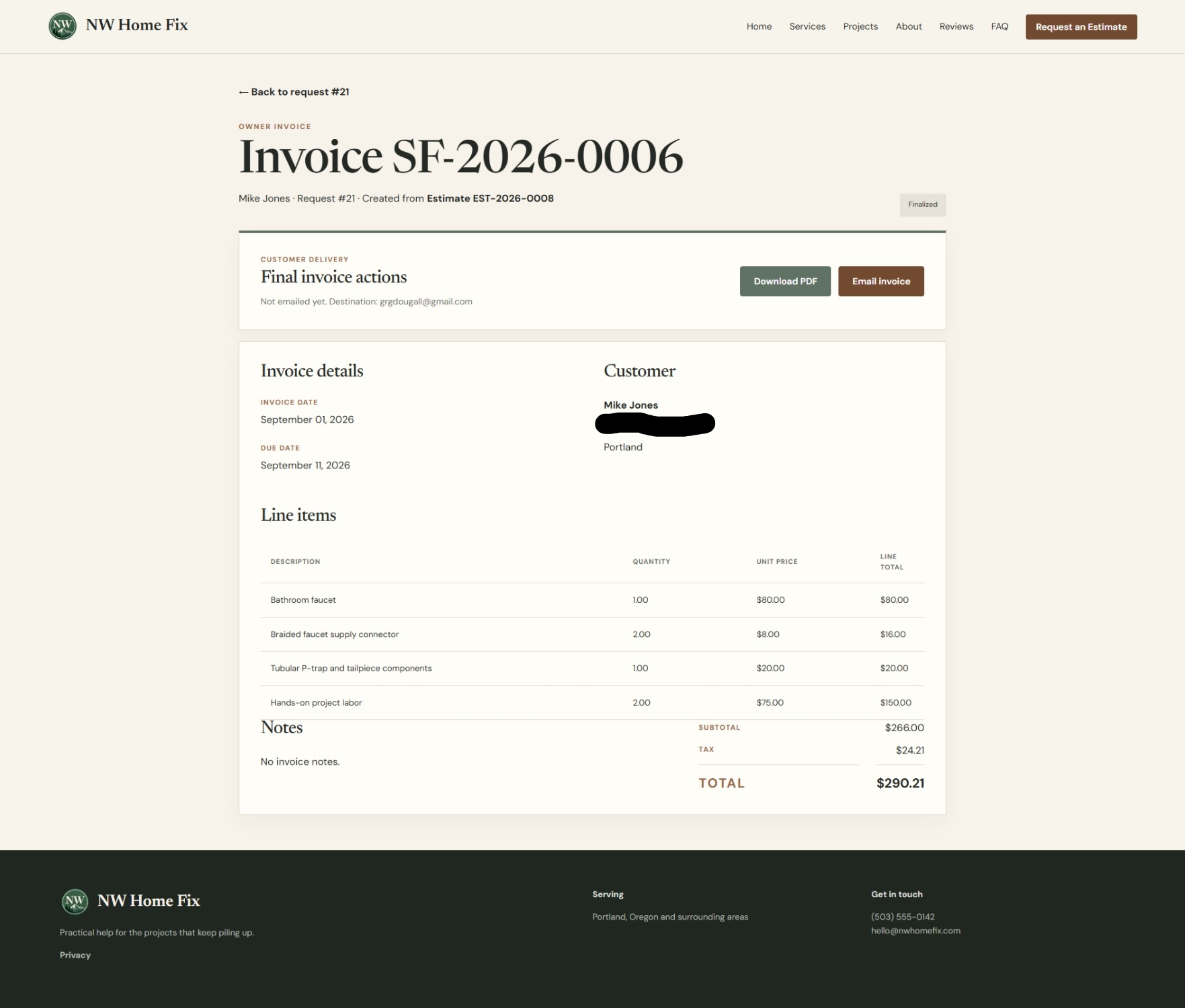
In SmartFix, request context can continue into estimating, scheduling, invoicing, and follow-up work. The interface can show a connected service history because the underlying records remain related instead of becoming isolated documents.
Takeaway
What I carried forward
Relational design is not background plumbing. It determines whether a multi-stage workflow behaves like one coherent system or a collection of disconnected records.